
Gas cooking equipment delivers instant heat control, reliable performance, and cooking results electric alternatives struggle to match. If you walk into any busy commercial kitchen in Australia today, you’ll find gas cooktops and ovens in daily use.
And that preference is practical rather than just traditional. Gas-powered appliances respond immediately to heat adjustments, which gives chefs the precision they need during busy service. This performance also influences energy consumption and the lifespan of your equipment.
In this article, you will find a clear breakdown of:
- Why gas remains the preferred choice in professional kitchens
- What sets it apart from other cooking methods
- How to choose the right range for your setup
Let’s get started.
The Real Reason Gas Burners Still Run Most Professional Kitchens
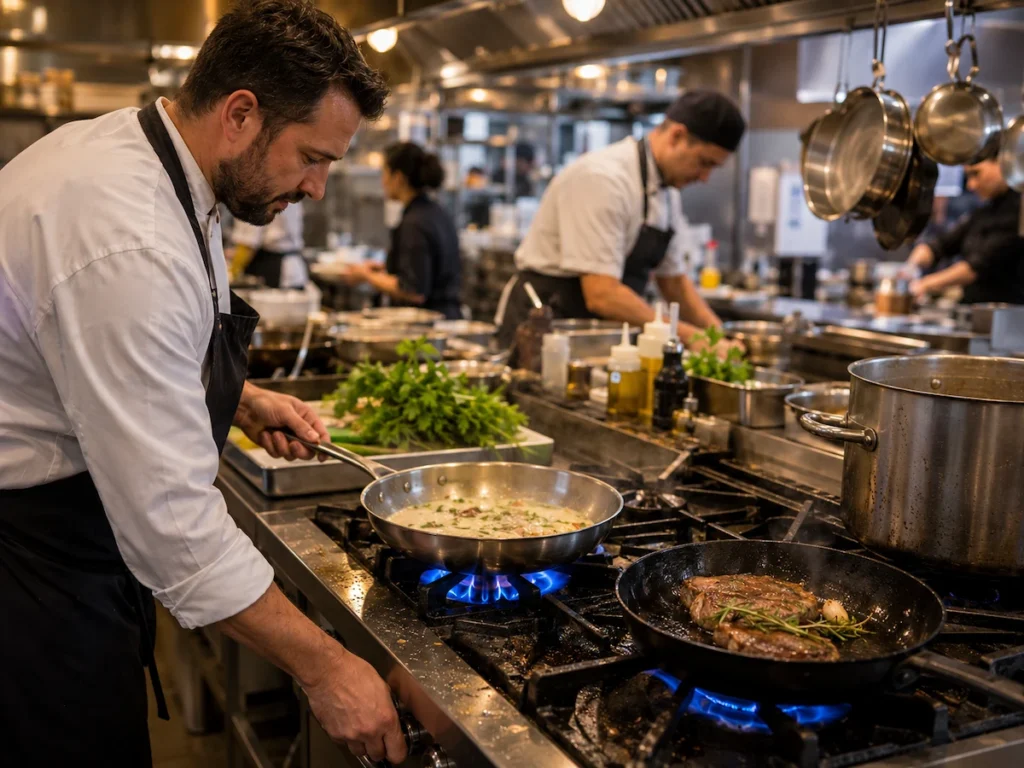
We’ve already mentioned that gas burners remain the preferred choice in professional kitchens because chefs can see and adjust the flame throughout the cooking process. That visibility makes it easier to simmer delicate sauces, sear at high heat, or reduce the temperature before food overcooks.
Specifically, two things explain why that reliability holds up day after day:
1. Heat That Responds Fast
Gas burners respond to temperature changes instantly while electric cooktops can lag by several seconds. This delay barely registers in a home kitchen but becomes a real problem during busy service when precise adjustments are important.
With these burners, chefs can raise the heat for a quick sear or lower it to a gentle simmer without waiting for the cooking surface to respond. Every adjustment happens the moment it’s needed, without interrupting the cooking process.
Instant heat adjustment also helps chefs recover quickly when a pan runs too hot during busy service. Meaning, you can correct the heat in real time instead of after the damage is done.
2. Temperature Control Chefs Actually Trust
As gas flames give a visible heat indicator, chefs can judge intensity at a glance. That way, they don’t have to guess anything.
Generally, electric cooktops require trial and error to reach your desired heat level. In this case, gas burners let you adjust the flame instantly, which makes fine-tuning during service quicker and more precise.
Consistent flame output also helps chefs produce the same results throughout a busy dinner service. That consistency becomes especially important when preparing hundreds of meals, where every dish needs to meet the same standard.
Gas Cooking Equipment and the Cost of Running a Commercial Kitchen
Running a commercial kitchen is expensive, and the equipment you choose has a direct impact on your weekly energy bill.
In that sense, gas cooking equipment is cheaper to run than electric in high-output environments. Over time, those savings become more noticeable across a full week of service.
Here are three cost factors you should consider before you order new kitchen gear:
- Gas Runs at a Lower Operating Cost: Any chef who has worked a Friday night service knows idle equipment still costs money. In practice, gas appliances heat up more quickly than electric alternatives, which cuts idle time and reduces overall energy waste.
- Designed for Heavy Use: When you compare the daily operating hours of commercial food preparation to home cooking, the gap is significant. The number of cycles these commercial units handle would wear out a standard home appliance in months. So searching for equipment to match that output is non-negotiable.
- A Longer Service Life Spreads the Cost: Outlasting electric alternatives in heavy daily use is one area where commercial gas appliances consistently perform well. In this case, a longer service life means the upfront cost is less. It gives kitchens a better return on what they spend.
Simply put, gas-powered appliances offer a practical, cost-efficient foundation for kitchens cooking at volume. Those lower running costs become more valuable as daily cooking hours increase.
What Makes Gas Different From Other Cooking Methods
Gas stands apart from electric and induction because live flame delivers multi-directional heat and instant response.
Honestly, every cooking method has its strengths, but they don’t all suit the same kitchen. Gas, electric, and induction each generate heat in different ways. Those differences affect cooking speed, temperature control, and the dishes they handle best.
The areas below show where gas outperforms other cooking methods.
How Gas Flame Behaviour Changes the Way Food Cooks
Gas flame distributes heat across the base and sides of cookware. Meanwhile, electric and induction cooktops heat from the bottom only, which changes how evenly food cooks through.
This multi-directional thermal output suits heavy cast-iron and carbon-steel pans well (cast iron especially loves this surrounding heat). Plus, both materials respond to that wraparound warmth that flat electric elements cannot produce.
Not to mention, cooking over gas often gives food better caramelisation and a richer crust. For instance, a steak seared on a gas burner picks up an even crust and keeps the cooking surface consistently hot.
Wok Cooking, Charring, and High Heat Techniques
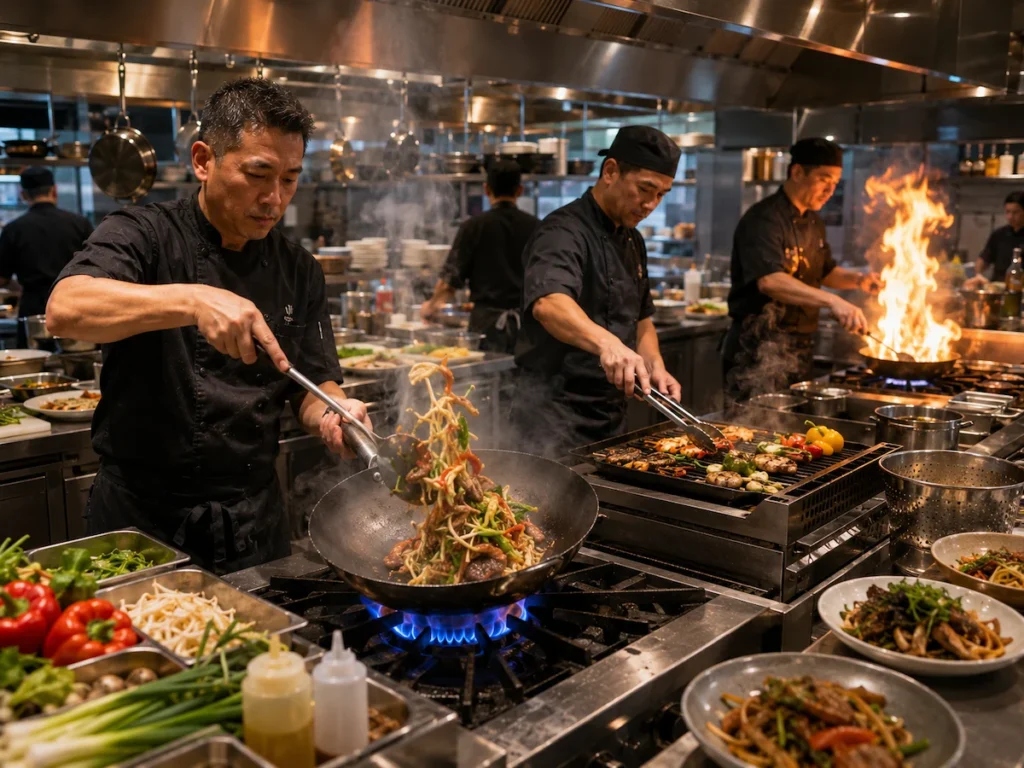
Wok cooking requires intense, direct flame that only gas burners can reliably deliver. The high, concentrated heat output from these burners keeps the wok surface at the right temperature even when cold ingredients hit the pan.
Charring vegetables or proteins over open flame also adds a depth of flavour that electric methods cannot replicate. That slight smokiness and char come directly from contact with live fire.
On top of that, techniques like flambéing simply have no alternative without live flame. You need an open fire to ignite the dish, and induction or electric cooktops don’t provide that direct flame. As a result, gas remains the only practical option for those types of culinary work.
Choosing the Right Gas Cooking Equipment for Your Kitchen Setup
Today’s commercial gas equipment suits kitchens of every size and menu type. In our experience supplying gas appliances across Australia, the connection type is the detail most kitchen operators overlook until it is too late.
So before choosing any appliance, you need to decide between a natural gas or LPG setup, as one wrong choice can lead to expensive changes after installation.
A quick comparison to help you find the right fit:
| Equipment Type | Best For | Power Output | Fuel Type |
| Gas Cooktops | High-volume cooking surfaces | High | Natural gas or LPG |
| Gas Ovens | Baking and roasting | Medium to high | Natural gas or LPG |
| Standalone Burners | Wok cooking, charring | Very high | Natural gas or LPG |
| Range Cookers | Full kitchen variety | High | Natural gas or LPG |
To ensure safety, a licensed gasfitter must handle all gas appliance installations according to Australian safety standards. This process helps you choose the right equipment and install it safely, so your kitchen performs reliably from day one.
Many Australian brands like Blue Olive supply gas cooking equipment in a variety of sizes to suit different kitchen setups across Australia. The range includes gas cooktops, ovens, and cookers to cover the most common cooking needs.
Your Next Step Toward a Better Kitchen Setup
Gas cooking equipment has held its place in professional kitchens for years. The heat control, cooking performance, and long-term reliability are difficult to match with electric or induction alternatives. When you compare the full picture, gas consistently comes out ahead for high-volume food preparation.
However, choosing the right appliances doesn’t need to feel complicated. Start with three practical checks:
- Measure your available kitchen space
- Confirm whether the site uses natural gas or LPG
- Choose cooktops and ovens that suit your menu and service volume
Blue Olive has a wide selection of gas appliances ready for delivery across Australia. Visit our page today to discover the full range, compare your options, and find the perfect fit for your kitchen.