

Upgrading your kitchen sounds exciting until you start choosing appliances. An induction cooktop speeds up cooking, a smart oven simplifies meal prep, and a built-in dishwasher frees up counter space. But which upgrades are actually worth the investment?
We’ll answer that in this guide. You’ll learn which kitchen appliance upgrades can make cooking, cleaning, and organising your space easier. You’ll also find out what to consider before buying, so you can choose appliances that work for your kitchen and your budget.
Switch to an Induction Cooktop for Faster Heating and Easier Cleanup
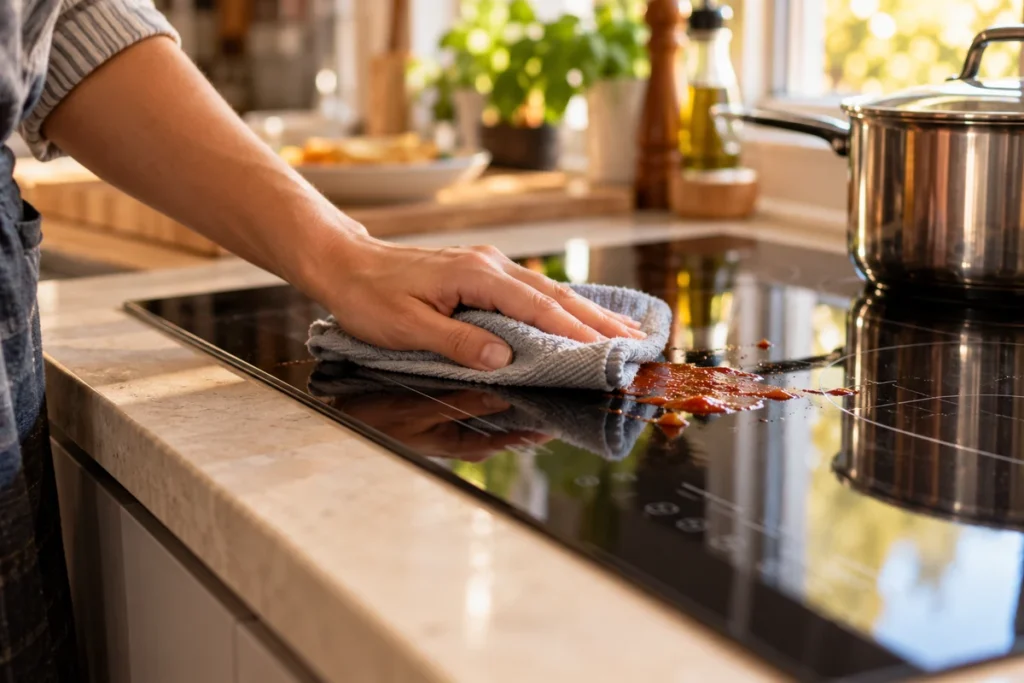
Boiling a litre of water can take around six minutes on a conventional cooktop, compared with roughly three minutes on induction. That saves you three minutes each time. It might not look like much at first glance. But if you boil water once a day, you’d save 21 minutes a week and 18 hours over the span of a year.
The difference comes from how induction works. Instead of heating the cooking surface first, it uses electromagnetic energy to heat compatible pans directly. The smooth glass surface also makes spills easier to wipe away than food caught around gas burners and grates.
But before you do switch, check whether your current cookware is compatible. Cast iron and many stainless steel pans work with induction, whereas some aluminium and copper pans don’t. To check whether yours will work, hold a magnet against the underside of each pan. If it sticks firmly, the pan is likely to be compatible with an induction cooktop.
Consider a Gas Cooktop for Familiar, Adjustable Heat
Induction is efficient, but that doesn’t mean it suits everyone. Someone who’s cooked on gas for eighteen years will naturally feel more at home with a flame they can see and control. If that sounds like you, a gas cooktop is still a solid upgrade.
Part of the appeal is how easy it is to use. You turn it on, then use the burner control to adjust the flame size (useful when you’re searing a steak or simmering a sauce). Gas also keeps working during a power outage, since it doesn’t rely on electricity to generate heat. That’s worth knowing if your area loses power occasionally during storm season.
And unlike induction, a gas cooktop works with any cookware, so there’s no need to replace your existing pots and pans. It’s safer as well, thanks to the flame failure safety device most modern gas stoves include. If the flame goes out unexpectedly, it shuts off the gas supply automatically, reducing the risk of a leak.
Add Smart Appliances That Solve Everyday Kitchen Problems

There’s no shortage of features in today’s smart kitchen appliances. You can preheat your oven from your phone, get alerts when cooking is finished, and monitor your fridge’s temperature remotely. With so many options, it’s hard to know which ones you’ll actually use. We’ve found two that genuinely save time, day to day.
Control Your Oven Remotely and Get Cooking Alerts
It happens to everyone. You leave the house, then think, did I turn the oven off? So you double back just to check. With a smart oven, you can check from your phone, no matter where you are.
It can also send alerts, so you know when your roast is done or if the oven’s been left running longer than expected. That’s useful on a busy evening; say you’re still picking the kids up from school while dinner preheats at home.
Monitor Your Refrigerator’s Temperature and Food Storage
Fridges are built to keep food cold, so you don’t usually think about their temperature once you’ve set them up. But if the temperature rises because of a fault or a door left open, you might not notice straight away. Meanwhile, perishable food could sit at an unsafe temperature without you realising it.
A smart fridge can alert you when its internal temperature rises, which lets you check what’s wrong before more food is affected. Some models offer food inventory tools and expiry reminders, so you can track what’s inside and use groceries before they spoil.
You don’t necessarily need these extras, though. If you often forget what’s tucked away at the back of a shelf, food tracking might help. Otherwise, focus first on reliable cooling, enough space for your groceries, and energy efficiency.
Get More From Your Oven With Convection and Air-Fry Functions

Ever tried baking two trays of food at once, only to find one is ready while the other needs more time? You might end up rotating trays or leaving one dish in the oven longer than planned.
A convection oven can help with this. It uses a fan to circulate hot air, which helps food cook more evenly across the oven. Depending on what you’re making, it can also reduce cooking time. That’s especially useful when you’re preparing several dishes or baking multiple trays for a family meal.
Some ovens also include an air-fry function. It circulates hot air around foods like potato wedges and chicken pieces to crisp them up, using much less oil than deep-frying would. If you already have a countertop air fryer, though, you might not need this feature. An oven with air-fry capability could free up benchtop space, but only if you’re happy to use your oven for those meals instead.
Think about how you usually cook before paying extra for these functions. Convection is worth it if you regularly prepare large meals or bake several trays at once. Rarely reach for an air fryer? You can probably skip that feature and focus on what you’ll use most.
Choose a Dishwasher With Flexible Racks and a Quiet Cycle
You probably already have a dishwasher. But if it’s a few years old, it’s worth asking what actually frustrates you about it. Maybe you wash large pots by hand because they won’t fit. Or you avoid running a cycle at night because the noise carries into the living room. Those small annoyances can make an appliance less useful than it should be.
When you’re ready to upgrade, look for adjustable racks and fold-down tines that give you more room for bulky cookware. If your kitchen opens into your living area, check the dishwasher’s decibel rating, too.
A lower rating generally means quieter operation, so you can run a cycle with less disruption while you cook, talk or relax nearby. The actual noise level also depends on the wash setting you choose and how well the dishwasher is installed.
Free Up Counter Space With Built-In and Compact Appliances

Counter space can disappear quickly when the microwave, air fryer, kettle, and other appliances all compete for the same surface. That leaves less room for chopping ingredients, preparing meals, or setting out dishes.
One way to reclaim that space is to move appliances off the counter. An oven installed beneath the benchtop or a cooktop fitted into it leaves more room for food preparation. A built-in microwave can do the same by keeping the appliance inside your cabinetry rather than on the counter.
If your kitchen can’t accommodate built-in appliances, compact models offer another option. A slimline dishwasher or smaller microwave may fit into a tighter layout, although you’ll need to make sure its capacity suits your household.
Compact appliances are particularly useful in galley kitchens, where narrow walkways and limited bench space leave little room for bulky equipment. Even so, the appliance needs to fit your available space. That’s why you should measure the area and review the installation requirements before buying.
What to Check Before Buying a New Kitchen Appliance
An appliance can have all the features you want and still turn out to be a poor fit for your kitchen. It might not fit the space you have, need more installation work than you expected, or cost more to run than you’d like. So check these details before buying to avoid surprises later.
Measure Your Space and Check Installation Requirements
Appliance sizes vary even within the same category, so the opening that fits your old oven might not fit a new one. Before buying, measure the available width, height, and depth, then compare them with the manufacturer’s listed dimensions. For built-in models, check the required cabinet opening and clearance, too.
You’ll also need to make sure your kitchen has the right connections for the new appliance. An electric oven may need a suitable electrical circuit, while a gas cooktop needs a compatible gas connection. Check the ventilation requirements as well, especially if you live in an apartment with limited options for extracting cooking fumes.
Compare Energy Use, Maintenance Costs, and Useful Features
The price tag doesn’t tell you what an appliance will cost over time. Electricity, water, and maintenance can add to the bill, so it’s worth comparing these costs before spending your money on a model.
- Check the Energy Rating: Australia’s Energy Rating website explains how the star-rating system works. More stars generally mean better energy efficiency among comparable models, but check the estimated energy use on the label, too.
- Compare Dishwasher Water Use: Dishwashers have water rating labels as well as energy labels. Comparing both helps you see how much water and electricity each model is expected to use.
- Prioritise Features You’ll Use: Think about how you cook and which tasks you’d like to make easier. Remote oven controls can help if you want to preheat the oven before getting home, while food inventory alerts may help you keep track of groceries. If you rarely use these functions, choose a simpler model and save the extra cost.
- Consider Maintenance Needs: Gas cooktops may need periodic servicing, while induction cooktops have fewer burner components to maintain. Both still need regular cleaning and appropriate care.
Pro Tip: Before settling on a model, factor in installation costs as well as the purchase price. You might need additional wiring, a gas connection, or changes to your cabinetry. Weigh that total cost against the features you’ll actually use, so you don’t pay extra for ones you won’t.
A Functional Modern Kitchen Starts With the Right Upgrade
Over to you. Which kitchen appliance are you thinking of upgrading, and what would you like to improve? Let us know in the comments.
And if you’re looking for gas appliances for your Brisbane home, Blue Olive can help you find options that suit your cooking needs and budget. Visit our site for more information.