
Professional chefs evaluate cooking equipment by testing its heat response, build quality, and long-term durability before making any purchase. That level of thinking separates a kitchen that runs well from one that constantly lets you down.
Unfortunately, most home cooks skip that process entirely, and it shows up later in poor performance and early replacements. With a little guidance, that same evaluation method is easy to learn and apply every time you shop.
In this article, we’ll cover how professionals assess gas cooking systems, commercial kitchen appliances, cookware, and knives. You’ll also find a simplified version of that checklist for your own kitchen.
So, let’s get into it.
What Professional Chefs Look for in Cooking Equipment
Cooks look for consistent heat output, durable materials, and appliances that hold up under daily high-pressure use. In short, performance and reliability drive every equipment decision in a commercial kitchen.
The two areas that come up in any chef’s evaluation are heat control and budget. Here’s how they approach both:
Heat Control and Consistency Across Gas Cooking Systems
Gas cooking systems give experienced buyers instant, visual flame control that electric cooktops simply can’t match. That precision is why the majority of professional kitchens run on gas.
That said, buying a gas range without testing it first is a risk many professionals won’t take. They check every burner individually, because uneven heat across pans and pots leads to inconsistent results during service.
In fact, BTU output and flame stability rank higher on a chef’s checklist than brand reputation. After all, a well-known name means very little if the burner can’t hold a steady flame under pressure. If the flame flickers unevenly across any zone, most cooks won’t even finish the trial run.
How Chefs Factor in Budget Without Cutting Corners
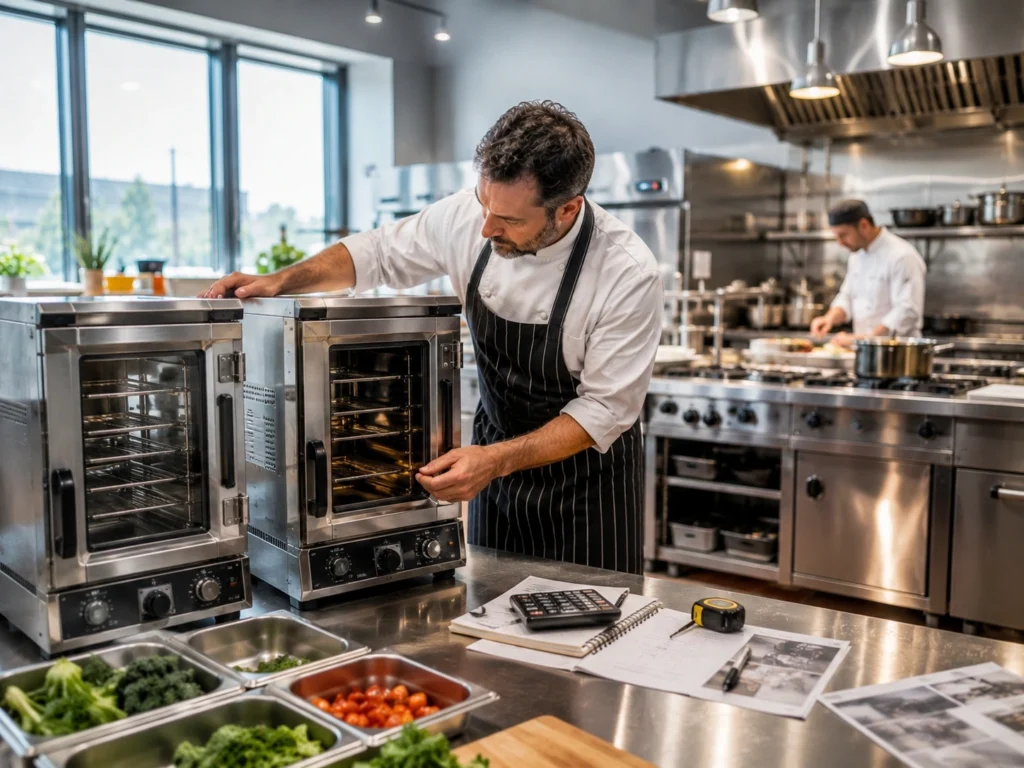
Experienced cooks can distinguish core performance features from optional extras before setting a budget. So, every dollar goes toward the appliances that get the daily use.
And frankly, home buyers often trip up here. Many choose the cheapest option instead of buying for long-term use. That decision often leads to more repairs and earlier replacements over time. That’s why experts treat budget as a planning tool rather than a ceiling.
For the most part, the appliances used daily get the most investment. A quality gas range or commercial oven takes priority over secondary equipment like fridges or storage units. This way, the tools that carry the heaviest workload are built to last.
Commercial Kitchen Appliances Worth the Investment
The right commercial kitchen appliances don’t just perform well on day one. In practice, restaurants and food service businesses rely on them to deliver consistent results across hundreds of services without breaking down.
Have a look at appliances that come up most often in a professional kitchen fit-out:
Convection Ovens in Professional Kitchens
Convection ovens circulate hot air with a fan, so food cooks faster and more evenly than in a conventional oven. That’s why professional kitchens lean on them for roasting, baking, and high-volume cooking across meat, bread, and vegetables.
Chefs evaluate convection ovens on two things above all else: temperature recovery and interior capacity. Temperature recovery refers to how quickly the oven returns to the set heat after the door opens. In a busy service, those delays stack up across a full service.
Similarly, interior capacity is about how many trays or pans fit in a single load. When covers are coming in fast, that directly affects how many dishes you can turn around at once. So naturally, buyers run the oven through a full heat cycle before signing off on any purchase.
Induction Cooktops vs Gas: What Cooks Prefer

Induction cooktops heat cookware directly through electromagnetic energy, with no open flame involved. They also offer strong energy efficiency and a clean cooking surface, which suits certain commercial kitchen setups well.
On the flip side, gas remains the top choice in most professional kitchens. From what we’ve seen across Brisbane kitchens, gas holds its ground simply because the control feels immediate and instinctive.
Ultimately, the decision is based on kitchen setup, ventilation, and the type of cuisine being prepared. For example, a restaurant focused on high-heat cooking like grills and searing will almost always favour gas over induction. It gives chefs instant flame control and reaches high temperatures with ease.
Can a Home Cook Use the Same Checklist?
Yes, home cooks can absolutely use a chef’s evaluation checklist. Because the core criteria of heat, materials, and durability apply to any kitchen other than a commercial one.
Now that we’ve covered what professionals look for, you can apply the same approach in your own kitchen. It helps you avoid poor purchases and unnecessary replacements.
Here are the areas worth focusing on before any kitchen appliance purchase:
- Heat Output and Cooking Surface: Strong, even heat separates a frustrating cooktop from a reliable one. Before buying, check the BTU rating on gas cooktops and test the spread across the full cooking surface.
- Durable Materials in Cookware: Cast iron and stainless steel pans outlast cheaper alternatives by years in regular home use. Both handle high heat well and are worth the extra spend upfront.
- Knives and Food Prep Tools: Before anything else, get a chef’s knife with a solid blade; it makes food prep faster and far less tiring. Pair it with wooden spoons and serving spoons to cover most cooking jobs.
- Energy Efficiency in Appliances: Running costs drop significantly with the right appliances in place. For example, gas cooktops and convection ovens deliver strong output without excessive energy use.
The right equipment makes cooking easier, more consistent, and more enjoyable. As your confidence grows, so do your skills.
What Sets Commercial Kitchen Equipment Apart From Standard Appliances
Commercial kitchen equipment is built for output that domestic appliances were never designed to handle. The difference shows up in build quality, heat tolerance, and how long the equipment lasts under daily heavy use.
Let’s have a look at the changes in the following sections:
Gas Appliance Requirements and Why Installation Is Needed
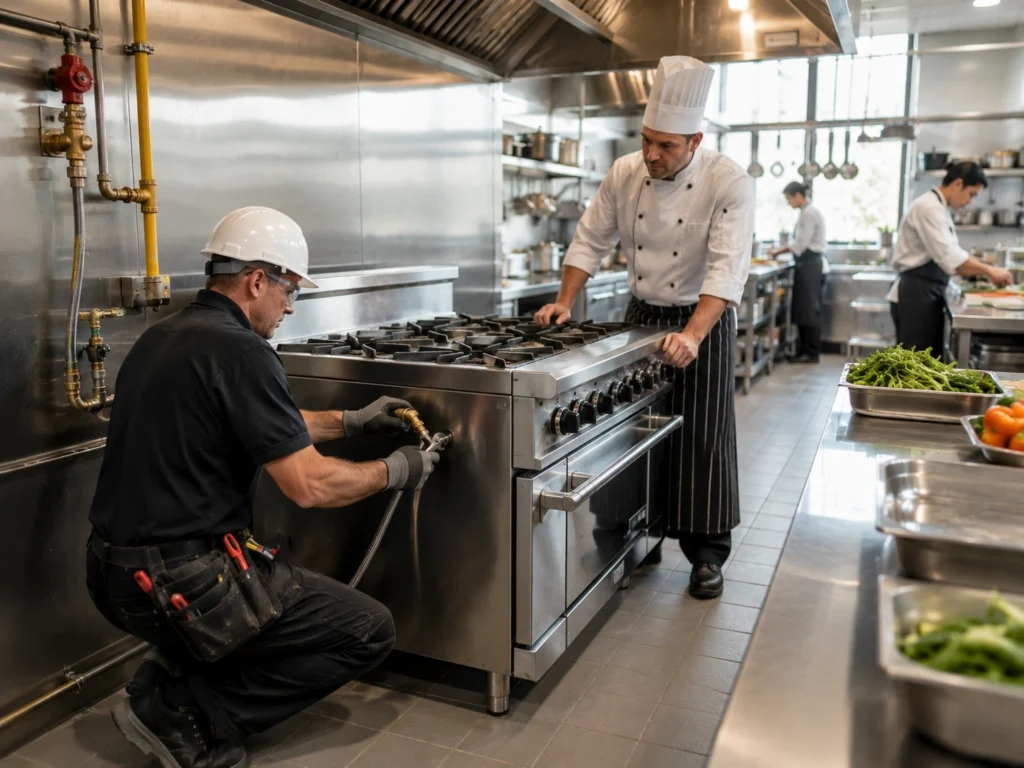
Gas appliances need a proper gas line connection, correct regulator pressure, and adequate kitchen ventilation before any installation begins. These checks form the baseline for safe and efficient operation.
The table below compares commercial and home gas appliance installation requirements:
| Feature | Commercial Equipment | Home Appliances |
| Build Standard | Heavy-gauge stainless steel | Light to mid-gauge materials |
| Heat Tolerance | High, sustained temperatures | Moderate, intermittent use |
| Daily Use Capacity | 10-16 hours continuous | 1-2 hours average |
| Lifespan | 10-15 years with maintenance | 5-7 years average |
| Installation | Licensed gasfitter required | Standard home install |
In Australia, only a licensed gasfitter can legally carry out gas appliance installation. With that in mind, skipping a licensed installation check is one of the most common and avoidable mistakes. If you cut corners here, you put both the appliance warranty and household safety at risk.
How Cooks Evaluate a Chef’s Knife and Smaller Tools Too
A chef’s knife gets evaluated on balance, blade steel quality, and how it feels after extended use. No serious chef buys a knife without holding it first.
Frankly, a knife that throws off your grip after 20 minutes of food prep will cost you time and a lot of frustration. Experienced buyers apply the same rigour to every tool. This includes knives and pans, tongs, spoons, and cookware.
After all, when something fails mid-service, it disrupts the entire flow. So professional chefs choose equipment that can handle the demands of daily use.
Upgrade Your Kitchen with Confidence
Every great kitchen, home or professional, starts with the question: are your appliances up to the job? Heat control, build quality, and the right installation process are the three pillars chefs check before any purchase.
For home cooks, the takeaway is to apply the same checklist to your next appliance or cookware purchase. By doing so, you’ll avoid the replacements and frustrations that come from buying without a plan.
Blue Olive stocks a wide range of gas appliances and commercial kitchen equipment for serious home cooks across Brisbane. Browse our range online or get in touch with our team for expert advice. We’ll help you choose equipment that suits your kitchen, and we back every product we supply with our quality guarantee.