
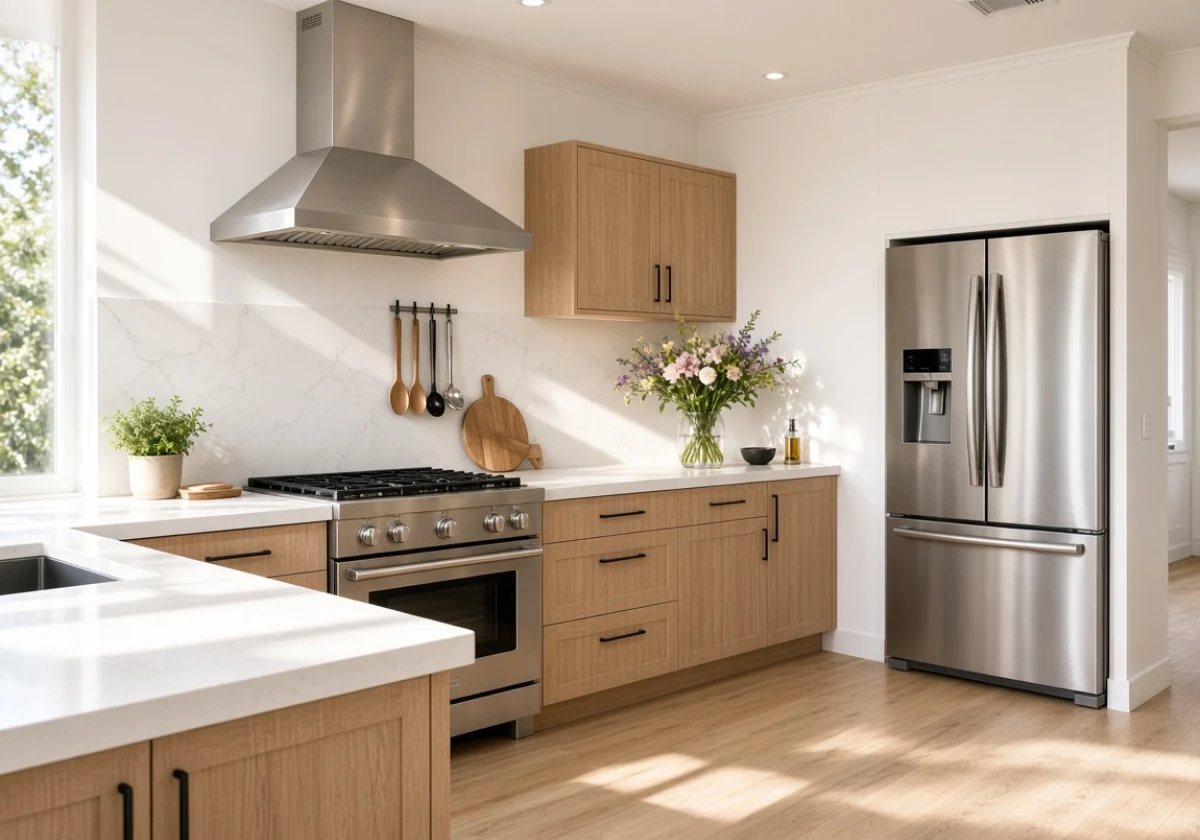
Choosing the right range hood decides whether grease, steam and cooking odours leave your kitchen or settle into every surface and appliance you own. You might think one fan is much like another. Still, your cabinet doors, light fittings and the top of your fridge keep a record of what it missed.
Most buyers still shop on width and finish, then end up living with a unit that hums loudly and clears almost nothing. Blue Olive hears that complaint often, and the good news is that the fix starts well before the box lands on your bench.
This guide walks you through what kitchen ventilation protects, how the main styles differ, and what size and extraction rate actually buy you. We finish with installation and filter upkeep, so read on before you shortlist anything.
Kitchen Ventilation: What a Kitchen Exhaust Fan Protects

Most home cooks only notice their kitchen exhaust fan once the smoke alarm starts screaming. Yet the same people research washing machines, coffee machines and wine fridges for weeks, then grab whatever hood matches the cooktop brand. That habit treats the fan as an accessory, when it actually controls the air you breathe while you cook.
Well, gas burners make that gamble costlier than it looks, and UNSW research on gas stove air pollution showed why. It pointed out that houses with gas stoves can have nitrogen dioxide levels three times higher than houses with electric stoves. That gas irritates your airways and can worsen asthma, so switch the fan on the moment you light gas cooktops.
Running the fan early also captures airborne grease before it settles on nearby surfaces.. Every fry-up lifts a fine mist that lands on cupboard doors, the small appliances on your bench and the dishwasher front(that film is airborne cooking oil, nothing more exotic). Pull a filter out after a season of weeknight cooking, and you’ll feel the weight of what it caught.
Steam works more quietly than grease, so you rarely notice the damage until it shows. Moisture left indoors feeds mould in cupboard corners and makes air conditioners work harder during humid summers. Vent it properly, and you’ll protect your lungs, cabinetry and nearby kitchen appliances.
Rangehoods Compared: Canopy, Undermount, Slide-Out and Fixed Styles
Knowing the main rangehood styles makes it far easier to pick one that suits your kitchen layout. Each style answers a different question, like where the hood sits, how it balances functionality and style, and how much air it can pull away. Below, we’ve set out the four setups worth comparing before you spend anything.
Canopy Rangehoods for Open Kitchen Layouts
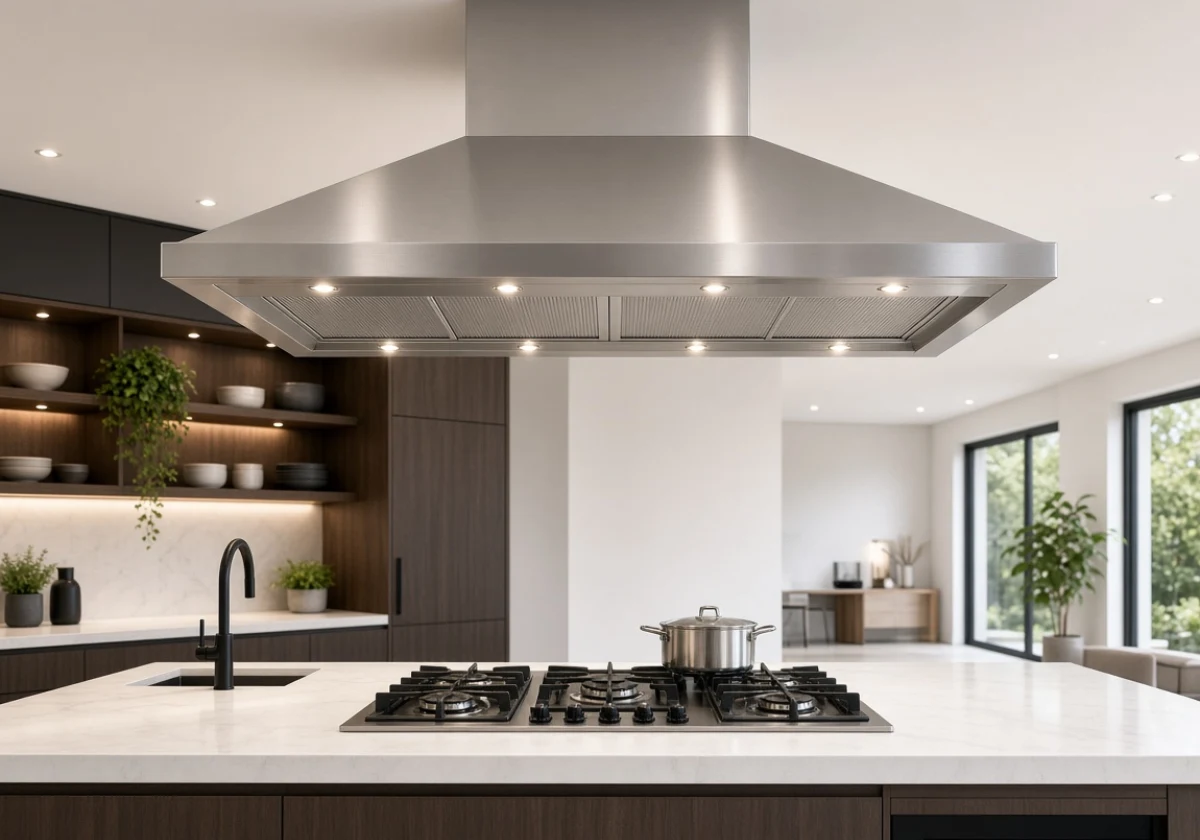
Canopy rangehoods are wall-mounted or ceiling-mounted above your cooktop, so nothing hides them. Their wide shape collects rising steam across a big area, which suits island benches and open-plan rooms.
Finishes run from plain steel to stainless steel with black glass, so the hood can sit alongside your ceiling lights rather than fight them. Looks only get you halfway, though, because width decides what the canopy actually catches.
Our Suggestion: Pick one that matches or beats your cooktop, since a 90cm canopy rangehood over a 90cm burner surface loses far less steam at the edges.
Undermount Models That Hide Inside Your Cabinetry
Tucked into the cupboard above the cooktop, undermount rangehoods leave only a slim fascia on show beneath the cabinet doors. When your kitchen runs along a narrow galley, that low profile keeps sightlines clean where a tall canopy would crowd the room.
Although the hidden housing looks tidy, you do trade away some capture area, because the intake sits flush under the cupboard. For that reason, measure the cupboard cavity before ordering (cavities rarely match the brochure, so trust your own tape). Check the internal width, depth and height of the carcass as well, since door fronts and side panels can hide a narrower space.
Once you know the real dimensions, deeper models earn their price wherever the cabinet allows the extra depth. Width deserves equal attention, so check the manufacturer’s required cabinet dimensions before ordering a 90cm undermount rangehood.
Slide-Out and Fixed Units for Smaller Spaces
Slide-out rangehoods pull forward while you cook, so you get more cover over the front burners. Fixed rangehoods, on the other hand, stay put and cost less, which is why you’ll find them in so many units and rentals. Over a wide cooktop, though, a 90cm slide-out reaches further than any fixed model can.
If a weekend fry-up still fogs your window, you already know the limit of a small fixed rangehood. Heavy-duty metal mesh filters are worth the extra either way, since disposable pads clog fast.
Ducted Venting or a Carbon Filter: Which Setup Fits Your Home?
Ducted venting suits any home that can run a duct to an outside wall, or up through a top-mount outlet above the ceiling. That’s because the National Construction Code exhaust discharge rule is blunt about it. Under Housing Provision 10.8.2(2), exhaust from a kitchen range hood must discharge to outdoor air, directly or via a shaft or duct.
A carbon filter, by contrast, only scrubs odours, so recirculating exhaust fans hand the same moisture straight back to the room. Keep that option for apartments where ducting isn’t possible, and swap the charcoal before smells start hanging about.
How Do Size, Extraction Rate and Price Influence Your Choice?
Size, extraction rate and price work as deciding factors because together they set how much air your rangehood moves for the money. Width and motor strength both push that price up, so the kitchen cooking you do most nights should decide where you start.
Let’s have a look at how this buying guide table pairs your cooktop with a width that works.
| Your cooktop | Width to shop for | Spec to compare | What it means in practice |
|---|---|---|---|
| 60cm, four burners | 60cm or wider | m³/hr on the top speed | Enough for everyday pans and the odd roast |
| 90cm or a wok burner | 90cm | m³/hr plus the noise rating in dB | Handles high heat without you shouting over the fan |
| Island bench | 90cm canopy or wider | Extraction rates against duct diameter | A narrow duct throttles a strong motor straight away |
In practice, a disappointing hood is usually just narrower than the cooktop underneath it. Put your budget into width and motor first, then treat LED strip lighting and touch controls as the extras they are.
Planning Your Range Hood Installation and Ongoing Upkeep
Once you’ve settled on a model, proper range hood installation and regular upkeep decide how long it lasts. Start with the height your manual gives, measured from the cooktop to the housing’s underside. If you mount it too high, steam drifts past the filter, while mounting it too low lets flames scorch the metal.
You can’t overlook ducting because every extra bend costs airflow and adds noise. Leave the wiring to a sparky and anything near gas to a licensed fitter (a quote beats a surprise rewire, every single time).
Put these five jobs on your calendar once the unit is in:
- Wash the grease filters in hot soapy water or the dishwasher before the mesh turns sticky.
- Swap the carbon filter on a recirculating unit as soon as odours linger.
- Wipe the stainless steel housing along the grain, keeping harsh cleaning products off brushed finishes.
- Check the outside vent flap still swings open, since lint and insects jam it shut.
- Order spare parts such as lamps and filter clips, plus cleaner accessories, from the brand that built the unit.
Working through that list holds the airflow you paid for and keeps grease out of your ductwork.
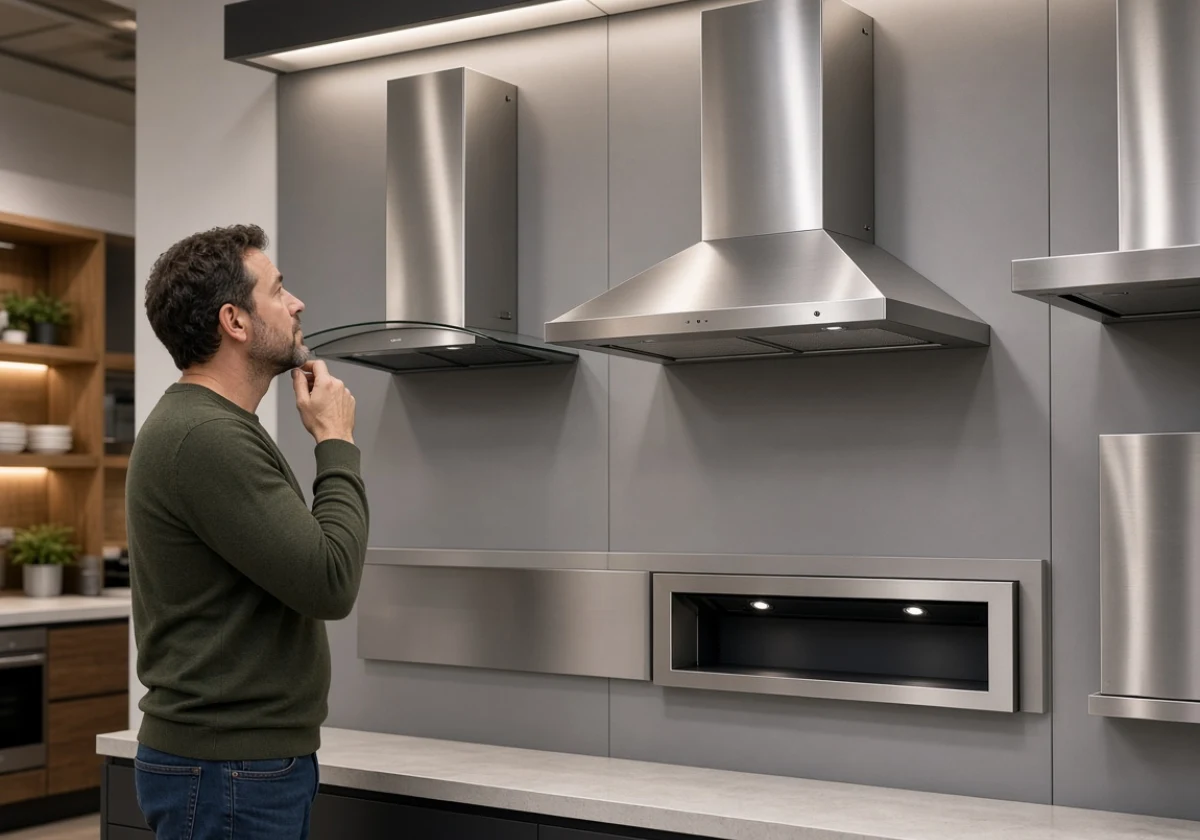
Bring Home a Rangehood That Works as Hard as You Cook
A rangehood performs best when its width, extraction capacity and ducting suit your cooking habits. Regular filter cleaning also helps it maintain that performance over time.
Measure your cooktop and the cupboard space above it this week, then compare extraction rates at that width. A few minutes with a tape measure saves years of scrubbing.
Blue Olive helps homeowners match a rangehood to the kitchen they already cook in. Talk to the Blue Olive team about your layout, and we’ll help you shortlist the sizes and venting that fit it.