
Energy efficiency affects gas appliance costs over time by reducing fuel consumption and lowering your monthly bills. And when you use less gas, you pay less on your bills each month.
Most Australian homes have at least one gas appliance, whether it’s an oven, a cooktop, or a heater. But the problem is, many of us don’t think about these running costs until we open a bill that seems way too high. And, by then, small inefficiencies have already built up over months.
The good news is you can save money with energy-efficient gas appliances without changing how you cook. A gas oven with a higher star rating, for example, uses less fuel to reach the same temperature. Over a year, this can make a noticeable difference in your energy bills.
In this guide, we’ll break down gas appliance running costs in plain terms. You’ll learn how to spot inefficiencies and make smarter choices for kitchen efficiency and long-term comfort.
First, here’s how energy-efficient gas appliances lower your bills.
Why Upgrading to Energy-Efficient Gas Appliances Saves You Money
Energy-efficient gas appliances save you money because they use less fuel to cook your food. They heat up faster, spread warmth more evenly, and don’t waste gas the way older models do.
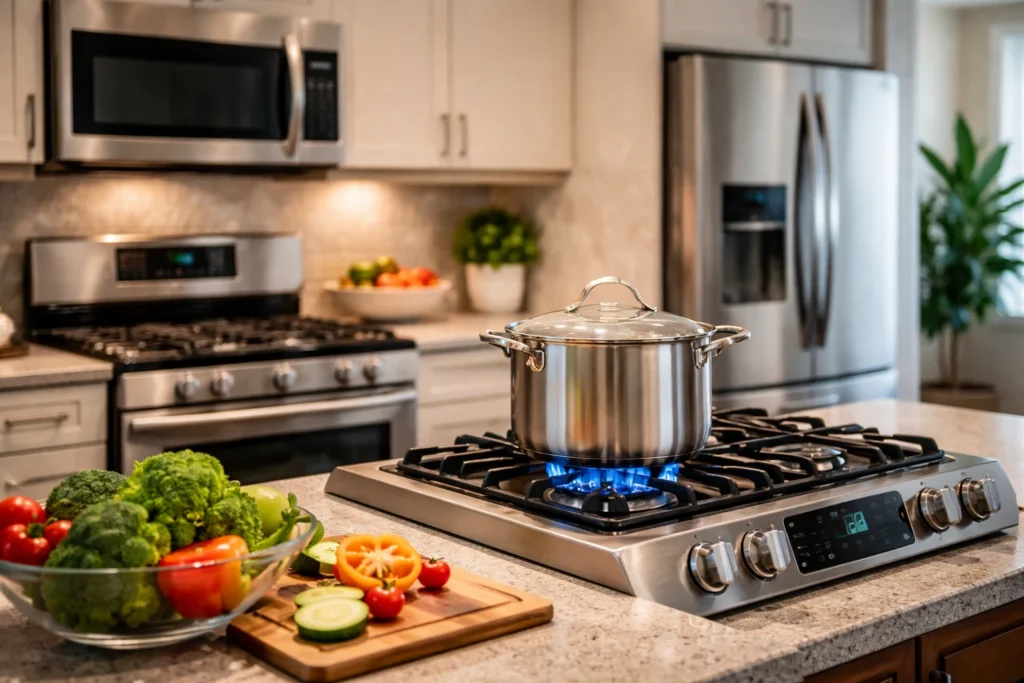
So what should you look for when choosing an appliance? Let’s go through a few things you need to consider.
What Makes a Gas Appliance Energy Efficient?
A gas appliance is energy efficient because it does a better job of sending heat where it needs to go. Instead of letting heat rise and spread around the cooktop, it focuses energy directly on the pot or pan. This means you use less gas to get the same cooking results.
Heat distribution is a big part of this. A good gas cooktop heats your cookware evenly, so you don’t end up with cold edges and hot spots in the middle.
Older appliances (10–15 years or more) often struggle with this because they have weaker insulation and outdated burner designs. But newer models from the last few years solve these problems from the start. They reach your desired temperature faster and hold that heat more consistently, which cuts down on how long the burner needs to run.
Savings from Your Gas Oven
How much your gas oven costs to run depends on two things: how often you use it, and how well it holds heat. One important factor is the door seal. A tight seal keeps hot air inside, so the burner doesn’t have to keep running.
But if your oven door doesn’t close properly, that hot air escapes every time you cook. Your oven then burns more gas to maintain the temperature, which increases your energy bills. It’s a small problem that can cost you more money over time.
Another factor is cleanliness: a clean oven heats more evenly because there’s no built-up grease blocking the heat flow. Regular maintenance, like wiping away spills and checking seals, can keep your oven running efficiently.
We’ve also seen how, sometimes just replacing a worn door seal easily lowered people’s running costs over time.
Know Your Labels: Energy Ratings Explained
In Australia, gas appliances display energy rating labels with a star system. The more stars an appliance has, the less gas it uses to do the same job. This system was designed to help consumers compare models quickly and make smarter choices.
You’ll also see an estimated yearly energy consumption figure on the label. This number tells you roughly how much gas the appliance will use each year under normal conditions.
For example, a 4-star oven might use 800 MJ a year, while a 2-star oven uses 1,200 MJ. At $0.04 per MJ, that’s $32 versus $48 a year. You can use the star rating and yearly energy together this way to get a better picture of your running costs.
So, when you’re upgrading, take a few minutes to compare labels side by side. A model with a higher star rating might cost a bit more upfront, but the savings on your energy bills can make up for that over time.
How to Reduce Gas Appliance Running Costs at Home
Reducing your gas appliance running costs starts with knowing what you’re actually paying for. When you understand how your appliances use energy, it’ll be easier to spot where you might be wasting money.
From there, you can make small changes or decide if an upgrade makes sense for your household. Below, we’ll walk you through the main things that affect your gas bills and what you can do about each one.
What’s Driving Your Gas Bill?
Your gas bill comes from a daily supply charge and usage charge.
The daily supply charge is a fixed fee for staying connected to the network. You pay this amount every day (even if you don’t use any gas at all). The usage charge is based on how much gas you actually consume.
Now, different appliances use different amounts of gas, so they each can affect your bill in their own way. For example, a gas oven that runs about five hours a week can cost around $50 to $80 per year, depending on local rates. In comparison, a gas cooktop uses less gas because you only run it for short periods while preparing meals.
However, hot water systems often use the most gas in Australian homes. Storage systems do this by keeping a full tank of water hot all day, which consumes energy even when no one is home.
Instant hot water systems, on the other hand, heat water only when you turn on the tap. This makes them more efficient and often cheaper to run over time.
Are Your Appliances Running Efficiently or Wasting Gas?
An efficient appliance delivers steady heat without burning more gas than it needs to. But as appliances get older, they often start to lose that efficiency. So if your gas oven is taking longer to heat up, or your cooktop flame looks yellow instead of blue, something may be wrong.
Uneven heat distribution is another sign that your appliance is struggling. Does one side of your oven cook food faster than the other? Then it heats unevenly, so the oven runs longer to finish cooking (…and your gas bill goes up).
As you can see, the age of your appliance, the brand, and how often you maintain it all affect energy efficiency. But just doing regular cleaning and checking your burners can improve heat distribution and overall cooking efficiency.
Gas Connections and Maintenance
Your gas connections also play a role in how efficiently your appliances run.
Worn or mismatched fittings can cause small leaks that you might not even notice. A misaligned burner has the same effect. Both problems force your appliance to use more gas just to keep up, and that extra usage shows up on your bill.
Annual servicing is a good way to catch these issues early. A licensed technician can check your connections, clean your burners, and make sure everything is running safely. This is especially important for gas heaters and hot water units, which work hard throughout the year.
Upgrade or Replace: Know When to Switch
If your gas appliance is more than ten years old, it may be time to consider an upgrade.
As we mentioned earlier, newer models are designed to be more energy efficient, which means they use less gas to do the same job. In fact, these high-efficiency gas appliances can reduce fuel use by up to 25% compared to older models.
You might also want to compare gas with modern electric alternatives. Induction cooktops, for example, operate at 80 to 90% efficiency (which is higher than most gas cooktops). Heat pump hot water systems are another option worth considering. They use electricity to move heat rather than generate it, so they’re cheaper to run over time.
But the best choice will depend on your household, your budget, and local natural gas prices. In some parts of Australia, gas is still the more affordable option. However, switching to electric might save you more in the long run.
Everyday Habits That Save Money
You don’t always need to buy new appliances to lower your gas bills. Sometimes small changes, like turning off the oven a few minutes early or taking shorter showers, can reduce gas use. These habits cost nothing to adopt but can noticeably lower your bills over the year.
Cooking with lids on your pots is another way to save gas. Lids trap heat, so your food cooks faster and the burner runs for less time.
If you have an older gas appliance (usually an oven or water heater), it probably has a pilot light. This is a small, continuous flame that safely ignites the main burner and uses a little gas all the time. Remember to turn it off for appliances you don’t use often to help lower your bills.
Running hot water in short bursts instead of letting it flow also helps save gas. The less hot water you use, the less energy your system needs to heat it.
Take Control of Your Gas Bills
We hope this guide helped you understand where your gas money is actually going.
The good news is that you don’t need to replace everything in your kitchen to start saving. Start by checking your oven door seal, giving your burners a good clean, or simply cooking with lids on your pots are all easy wins.
Of course, sometimes an upgrade is the smarter move. If your gas oven or hot water system is old and inefficient, upgrading to a newer, energy-efficient model can save you more on gas over time. Weigh your options based on what suits your household and your budget.
The main thing to remember is that you’re in control here. You get to choose what changes make sense for you.
If you’re thinking about upgrading your gas appliances, we’d love to help. At Blue Olive, we’ve been supplying quality gas ovens, cooktops, and hot water systems to Australian homes since 2005. We deliver across Australia and offer straightforward advice with no pressure.