
Choosing the right gas appliance for your kitchen starts with understanding how your space works. The size of your kitchen, how you cook, and where you place your gas cooktops all affect which model suits your needs.
However, most people only focus on burner power and features when shopping for a new cooktop, but the layout of your kitchen is just as important. For example, a cooktop placed in the wrong spot creates safety risks and makes cooking harder.
This guide walks you through matching gas cooktops to your kitchen layout. Plus, you’ll learn about burner power, safety features, and which materials last longest in Brisbane’s humid climate.
By the end, you’ll know what to look for when you shop for your next gas appliance.
Let’s dig in.
Gas Appliance Selection: Matching Your Space and Cooking Style
We’ve already mentioned that your kitchen’s size and layout directly determine which cooktop size and burner configuration will work best for your space.
Different kitchen styles need different gas cooktop setups to work properly. Match yours according to these constraints:
Kitchen Layout Types and Gas Cooktop Compatibility
According to our investigation, galley kitchens work best with compact cooktops between 600 mm and 750 mm wide. These smaller models usually have 2-3 burners, which gives you enough cooking zones without crowding your limited bench space.
Apart from that, open-plan kitchens can handle larger 4-5 burner models up to 900 mm wide since they have more room to work with.
Island installations need specific ventilation setups and clearance space around all sides for safe operation. There, you’ll also need to ensure your gas supply line can reach the island location properly.
Sometimes, corner placements limit access to back burners by making front-heavy burner configurations more practical for daily use (and yes, we’ve seen that happen more than once).
Measuring Your Available Cooking Zones
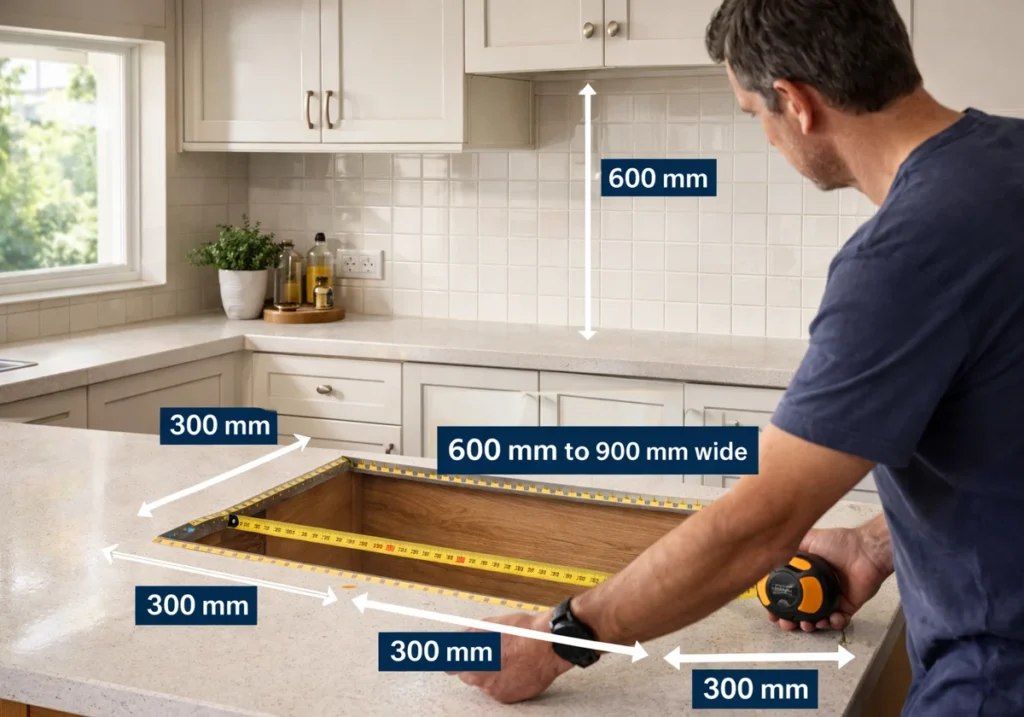
Standard cooktop widths generally range from 600 mm to 900 mm, so measure your benchtop cutout before shopping around.
However, most Australian kitchens have either a 600 mm or 750 mm cutout already installed. So, if you’re replacing an old cooktop, check the existing space to find compatible models.
Always leave 300 mm clearance on each side for heat protection and easy access when you’re working at the stove. This spacing prevents heat damage to nearby cupboards and gives you room to handle pots safely.
Finally, check the overhead cupboard height too. It’s because you need a minimum of 600 mm clearance above burners to prevent heat damage to your cabinetry.
Traffic Flow and Safety Features Placement
Position cooktops away from main walkways so kids and pets don’t accidentally bump into hot pots. Plus, high-traffic areas near doorways aren’t good spots for gas appliances because the open flame creates burn risks.
Avoid placing gas burners directly under windows where curtains or blinds could catch fire from flames. Even if you keep curtains tied back, wind can blow fabric toward the burners unexpectedly.
Besides, keep cooktops at least 300 mm from fridge doors and pantry access points for safer kitchen movement.
Burner Power and Cooking Zones: Finding Your Match
Most people underestimate how much burner power they need until they’re waiting ten minutes for water to boil.
Frankly, most cooktops sold in Australia come with at least one 2.5 kW burner, which handles everyday tasks just fine. It proves the power you need depends on what dishes you cook most often and how quickly you want your pots and pans to heat up.
Now, read the section below to find your match:
Understanding kW Ratings for Different Cooking Tasks
Basic simmering and gentle heating only need 1.75-2 kW burners for sauces, rice, and slow-cooked meals. These lower-power burners give you better control when you’re preparing delicate food that burns easily.
Meanwhile, everyday meal prep like boiling pasta or frying requires 2.5-3 kW burners for solid medium-high heat. This range covers most Australian home cooking without using excessive gas.
But rapid boiling and searing demands 3.5 kW power to get water boiling fast (that’s nearly double what most simmer burners deliver). High-heat cooking for meat and stir-fries benefits from this extra power.
Wok Burner vs Standard Burners
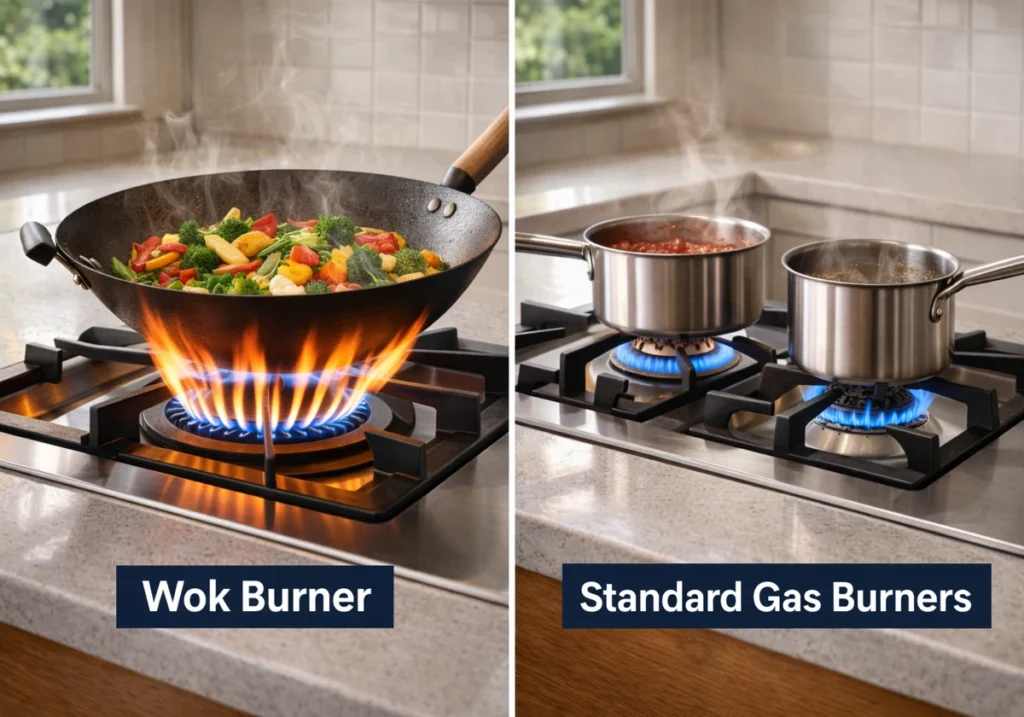
Basically, wok burners deliver 4-5 kW power with a wider flame spread, perfect for stir-frying and high-heat Asian dishes.
Drawing from our experience with Brisbane home cooks, wok burners make a real temperature difference when you’re stir-frying vegetables or searing meat at high heat. Its concentrated flame feature wraps around your curved cookware base, which creates the authentic flavour you get from restaurant cooking.
On the slip side, standard burners work fine for most Australian home kitchens but lack the intense heat woks you really need.
For your information, most standard 4-burner gas cooktops include one high-power wok burner, two medium burners around 2.5 kW, and one simmer burner for variety. This setup gives you the range needed for everything from gentle sauces to quick BBQ-style searing.
Cast Iron Trivets and Burner Stability
Cast-iron trivets support heavy pots better than lightweight steel grates. It also prevents wobbling during stirring and tossing.
On top of that, when you’re working with large stockpots full of soup or roasting pans loaded with meat, quality trivets distribute weight evenly across multiple cooking zones.
Continuous grates (one-piece designs) also let you slide pots between burners without lifting to make your meal prep smoother.
In this variety, some gas cooktops even come with removable trivets for easier cleaning, though the one-piece style offers better stability for heavy cookware and pans.
Energy Efficient Features That Truly Save You Money
The best part about modern gas cooktops is that they can cut your energy bills while giving you better control over heat.
Believe it or not, those old pilot lights waste more gas in a year than most people use for cooking.
So, here are the features worth looking for:
- Sealed Burners: These prevent gas wastage by directing all heat upward into your cookware instead of escaping sideways. In this burner, the flame also stays focused where it needs to be.
- Electronic Ignition Systems: You’ll use less gas than always-on pilot lights, saving around $50-80 yearly compared to older models (money that adds up over a 15-year lifespan). Just turn the dial, and the spark lights your burner instantly.
- Flame Failure Devices: Gas supply cuts off immediately after flames go out because heat sensors automatically shut off the flow within seconds. This feature prevents dangerous leaks and unnecessary waste.
- Multiple Flame Rings: Burners adjust heat more precisely, using only what’s needed for each task. Specifically, the outer ring handles high heat for rapid boiling, while the inner ring gives you gentle simmering control.
Bottom line: If you’re switching from an old cooktop or comparing gas to induction cooktops, these energy-efficient features make a real difference in your running costs.
Flame Failure Device and Essential Safety Features
Now that you’ve sorted out the right size and power, let’s talk about the safety features that protect your family.
How Flame Failure Protection Works
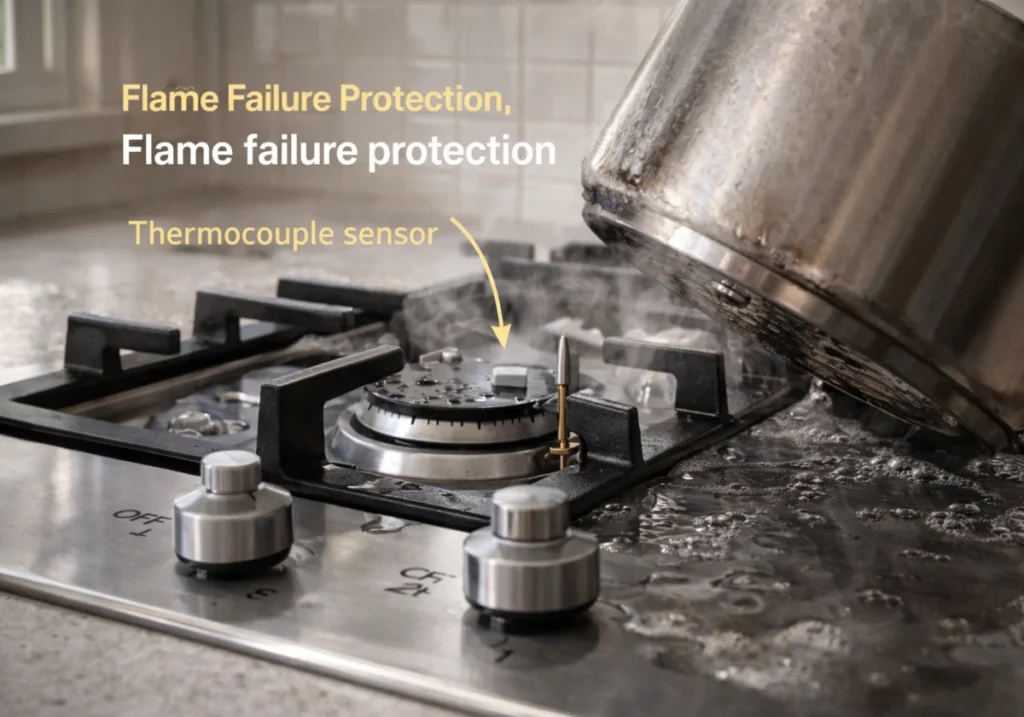
Heat sensors detect your flame and automatically shut off gas flow within seconds if it goes out unexpectedly.
But wait, there’s more to it. These sensors also prevent gas leaks if something accidentally knocks your pot off the burner. This safety feature prevents gas buildup in your kitchen if pots boil over and extinguishes the flame.
Now, all modern Australian gas cooktops must include flame failure protection to meet current safety standards.
However, this protection device uses a thermocouple sitting next to each burner. That’s why, when the open flame heats this sensor, it keeps the gas valve open. Conversely, the moment that heat disappears, the valve closes.
New Cooktop Safety Standards in Australia
Australian standards now require automatic reignition or clear warning indicators when burners fail to light properly. Besides, some newer models even try to relight the flame several times before shutting off the gas completely.
Most importantly, child lock controls prevent accidental activation, an important feature for families with young kids at home.
Beyond these, hot surface warnings show which cooking zones stayed warm after turning off to prevent accidental burns. The indicators here usually glow for 10-15 minutes until the oven and range cool down to a safe temperature.
Stainless Steel vs Other Materials: Best Value for Your Kitchen
What your cooktop’s made from is far more important than most people think, especially in Brisbane’s humid climate.
Let’s have a look at how the main options compare for gas cooktops:
Material | Durability | Cleaning | Cost |
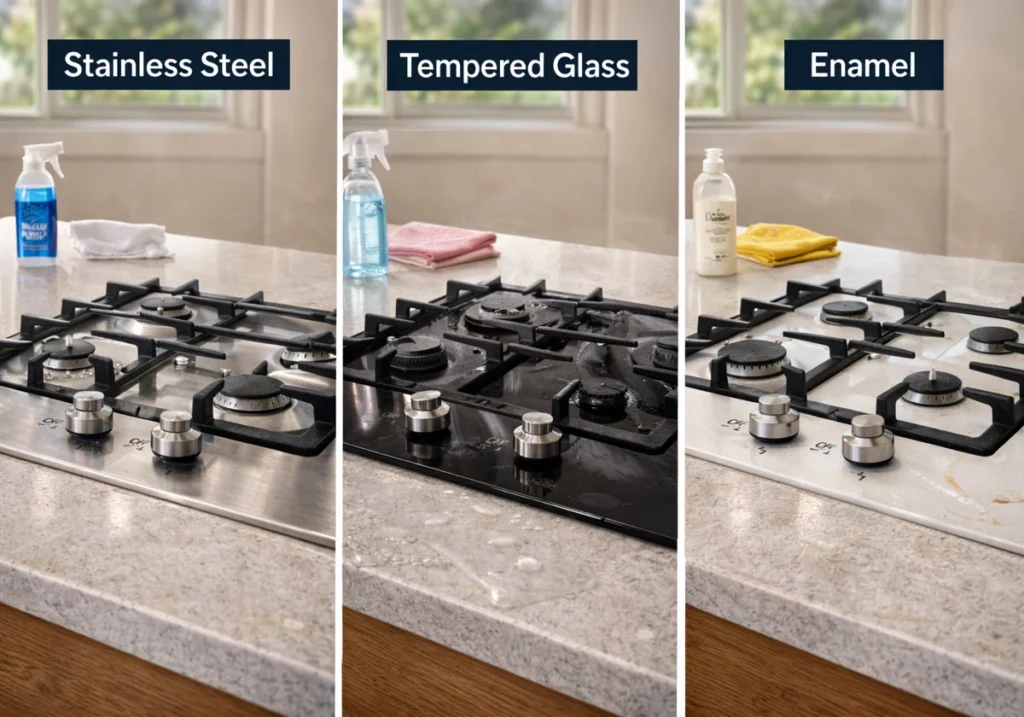
Stainless Steel | 15-20 years in humid conditions | Quick wipe down hides fingerprints | Higher upfront, best value long-term |
Tempered Glass | Chips easily, expensive repairs | Shows fingerprints, needs special cleaners | Premium price |
Enamel | Scratches and stains over time | Careful cleaning needed | Budget-friendly initially |
Verdict: Stainless steel consistently outlasts enamel finishes in humid coastal conditions.
From there, the material quality determines how long your investment lasts. Generally, quality stainless steel models offer the best value for your kitchen despite a higher upfront cost.
Besides, when you’re comparing different range options in the shop, test which finish you prefer and check what cleaning products work with each style. It’s because the bench space around your gas cooktop should complement the material you choose.
Find Your Perfect Gas Cooktop Match at Blue Olive
Choosing the right gas cooktop often starts with understanding your kitchen layout, cooking style, and the features you’ll use most. The space you have, burner power you need, and safety features all work together to create a setup suited to your family’s needs.
Gas appliances with the right oven capacity and cooking zones make meal prep more efficient. That’s why test different models to see which configuration feels natural for your kitchen workflow.
Blue Olive offers a wide range of gas cooktops and kitchen appliances to suit every Brisbane home. Visit our shop to discover models, or refer to our product guides for detailed feature comparisons. Then purchase the right cooktop for your space and budget today.
Contact us for expert advice on which gas appliance fits your kitchen best.