
While purchasing a gas appliance, expert guidance helps you avoid buying the wrong appliance for your kitchen. It also prevents costly installation errors and saves money on future repairs.
Sometimes, the wrong choice affects more than just your cooking experience, because the risks aren’t always limited to convenience. Poor installation by unlicensed fitters can void warranties and create dangerous gas leaks. Even small mistakes with ventilation or gas supply connections can lead to carbon monoxide build-up in your home.
This buying guide walks you through what professional advice covers and why it protects your investment. You’ll also learn how to size your gas cooktop properly, understand energy-efficiency ratings, and spot installation mistakes before they become expensive problems.
Read on to make an informed decision for your Brisbane kitchen.
Gas Appliance Advice: What You’re Really Paying For
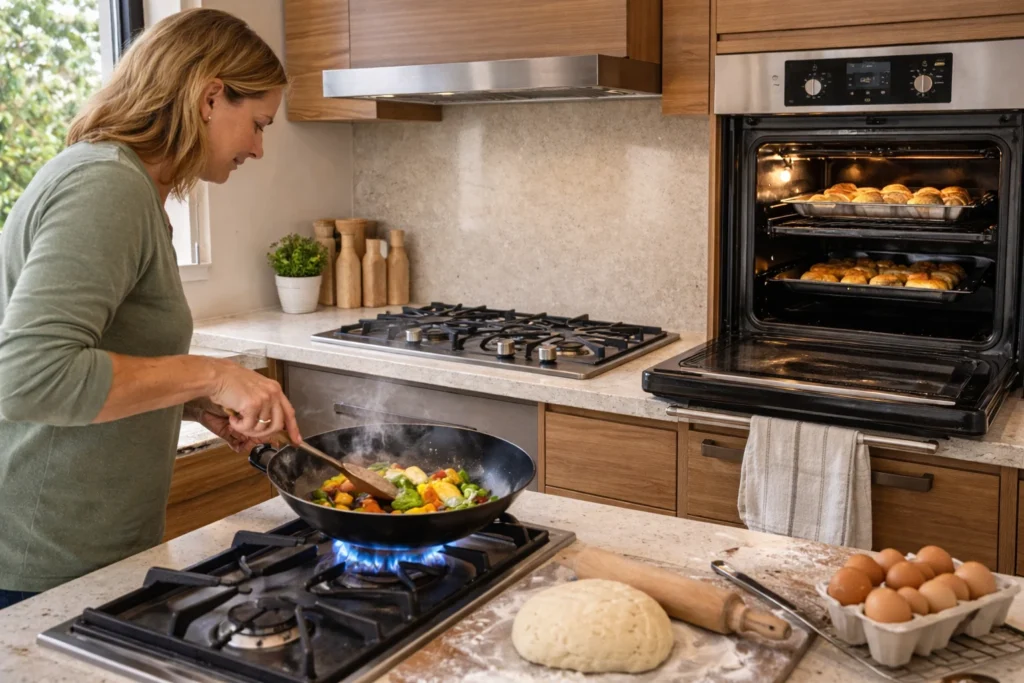
Generally, professional advice costs upfront but prevents expensive mistakes when you buy without proper guidance. That’s why understanding what you’re paying for helps you see the value in expert recommendations.
Before buying, understand the following basics first:
Understanding Your Kitchen’s Gas Setup
Natural gas and LPG connections need different fittings and pressure regulators. To be more specific, your home’s existing gas supply determines which appliances will work safely and efficiently.
However, older Brisbane homes in Paddington and New Farm often have outdated gas lines, which need upgrades before installation.
Besides, a licensed gas fitter assesses your current setup and spots potential problems early. They check pipe diameter, pressure levels, and ventilation requirements. This inspection reveals hidden costs like replacing old fittings or adding extra ventilation to your kitchen space.
Matching Appliances to Your Cooking Habits
Drawing from our experience helping Brisbane homeowners, we’ve learned that cooking style is as important as the kitchen size when choosing gas appliances. For instance, daily wok barners’ cooking demands high-output burners, while weekend bakers should focus on oven capacity over cooktop features.
Remember, the best appliance choice depends on your routine in the kitchen. That’s why mismatched purchases happen when shoppers choose appliances based on how they look instead of how they’ll be used.
A six-burner gas cooktop sounds impressive, but it wastes money if you rarely cook multiple dishes at once.
Budget Planning Beyond the Price Tag
According to our investigation, installation fees, compliance certificates, and kitchen modifications always add 20-30% to your appliance costs. Besides, energy efficiency ratings affect your quarterly gas bills for years ahead.
Don’t choose cheaper models since they lack proper safety features. In the future, they’ll also cost more through repairs and higher insurance premiums (and no family should take on unnecessary risks).
Running costs vary widely between different burners and energy ratings. So, planning your budget means looking at the total ownership expense, not just the sticker price.
How Many Burners? Sizing Your Gas Cooktop Properly
Your family size and cooking frequency determine how many burners you need, not what looks impressive in the showroom.
You might be wondering how to choose the right number for your kitchen. Well, a simple comparison helps narrow down your options.
Household Size | Cooking Frequency | Recommended Burners | Why This Works |
1-2 people | Occasional cooking | 4 burners | Covers basic meal prep without wasting space |
3-4 people | Daily cooking | 4-5 burners | Handles multiple pots during dinner rush |
5+ people | Frequent large meals | 5-6 burners | Allows simultaneous cooking for family meals |
Entertaining often | Weekly gatherings | 6 burners | Extra capacity for entertaining guests |
Pro tip: Kitchen layout and benchtop measurements determine your final gas cooktop selection beyond burner numbers. That’s why, measure the space between countertops before shopping for a new cooktop.
Most importantly, control knobs positioned at the front work better in homes where you need to supervise young children to keep their little hands away from hot burners and flames.
Energy Efficiency: The Long-Term Savings Story
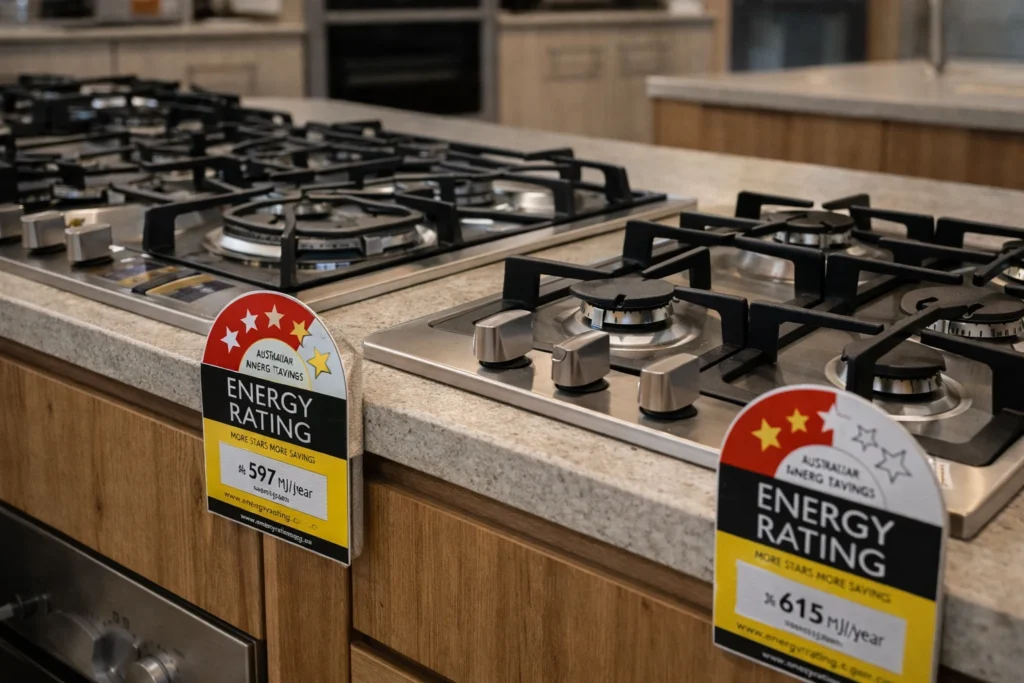
Higher star ratings mean lower quarterly bills, and those savings add up to hundreds of dollars over your appliance’s lifespan.
Next, we’ll break down how gas appliances use energy, so you can judge costs over time.
Star Ratings Decoded for Natural Gas
Gas appliances show energy labels differently from air conditioners and other electrical items. Here, the star ratings compare similar models within the same category. For example, a 4-star gas cooktop saves roughly $80-120 yearly compared to 2-star models in Brisbane homes.
In short, these ratings tell you how efficiently each model converts gas into heat.
Achieving rated efficiency depends on burner design and flame quality. Besides, home energy use varies based on cooking habits, but efficient models consistently cost less to run across Australia.
Simple Ways to Reduce Your Bills
From there, the focus shifts to practical ways you can cut costs. These tips work for any gas cooktop:
- Blue flames indicate complete combustion and efficient operation (and we’ve all watched that gas bill creep up when things aren’t working right).
- Yellow or orange flames waste gas and leave residue on your cookware.
- Regular burner cleaning maintains performance since blocked ports increase how much gas your cooktop consumes.
- Annual servicing keeps burners running at peak efficiency levels.
- Simmer settings with steady low flames save fuel during slow-cooking tasks.
Get these tips right and stop draining your budget.
When Control Knobs Truly Count
Control knobs truly count when precise flame control prevents wasted gas during cooking.
Cheap control knobs with limited adjustment positions burn unnecessarily high between settings. Meanwhile, quality gas control knobs let you fine-tune flames for different cooking methods.
Good mechanisms also prevent accidental bumps from changing flame levels mid-cooking. On top of that, when you close gas control knobs properly after use, they maintain their calibration longer and provide more reliable operation over time.
Installation Mistakes That Cost You Later
Now that you’ve chosen the right appliance, check out the installation mistakes and what it actually costs later.
Installation Mistake | What Happens | The Real Cost |
Unlicensed fitting | Voids warranties, creates safety hazards, illegal in Australia | Fines plus reinstallation by a licensed gasfitter |
Poor ventilation | Carbon monoxide builds up in your kitchen, creating dangerous air quality | Health risks, forced retrofitting of ventilation |
Wrong positioning | Fire hazards near curtains or timber cabinetry | Property damage, insurance claims rejected |
Inadequate gas pressure | Burners don’t work properly, inconsistent flames, wasted gas | Shortened appliance life, higher running costs |
Skipped compliance certificates | Can’t sell your home without proper documentation | Delays in property sales, expensive re-certification |
Improper leak testing | Flammable gas leaks that pass visual checks but fail pressure tests | Explosion risk, insurance nightmares later on |
Frankly, DIY gas fitting is illegal in Australia, and the risks go far beyond voided warranties.
Licensed gasfitters test connections properly using pressure equipment (the kind amateur jobs miss, leading to serious problems down the track). They ensure your installation meets current safety standards for gas appliances and any related electrical work.
Plus, the upfront cost of professional installation prevents expensive repairs and safety risks.
Getting Your Money’s Worth: A Practical Buying Guide
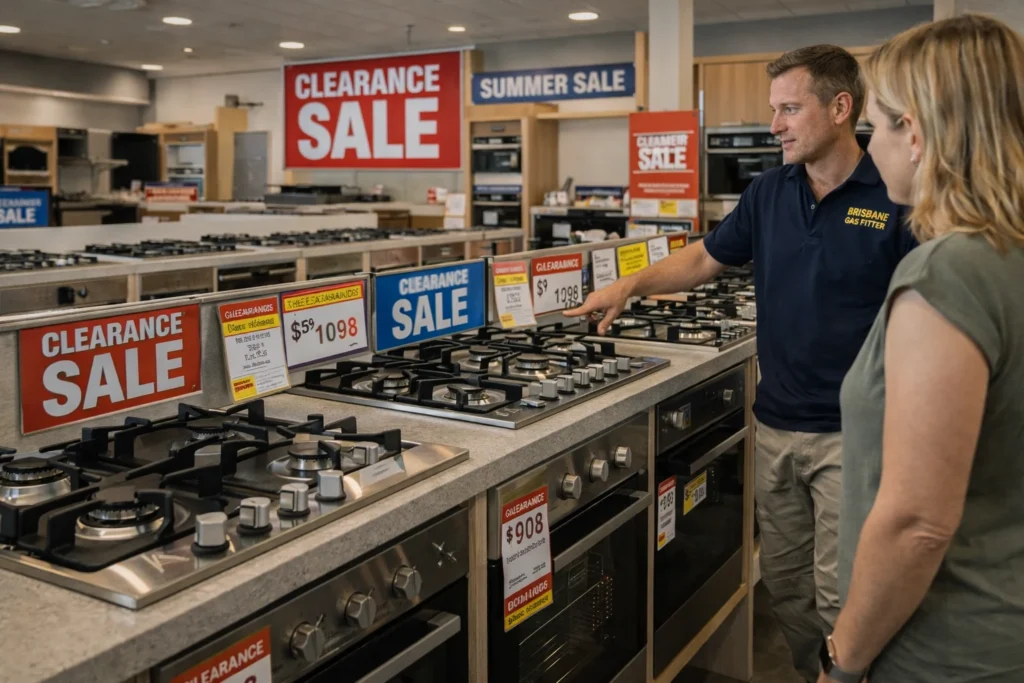
Once installation is sorted, the next step is choosing a model that gives you real value. The best part about working with knowledgeable suppliers is that they help you spend wisely instead of just spending more.
Wise purchasing decisions come from comparing the right features across different gas appliances in the Australian market:
- Warranty Coverage Comparisons: Some brands cover parts only, while others include labour costs in their guarantees. Our tests revealed that extended warranty offers from retailers rarely beat manufacturer coverage, so read the fine print carefully before purchasing add-ons.
- Feature Justification: Expert advice identifies which cooktop features justify higher prices versus unnecessary marketing additions. Initially, six burners sound impressive, but they cost more to run if you’re not using them regularly.
- Timing Your Purchase: January and February clearance sales in Brisbane offer genuine savings on quality gas appliances without compromising safety standards.
- Local Supplier Benefits: Brisbane suppliers in your local area provide after-sales support and servicing that online retailers simply can’t offer when problems arise.
- Model Research: Current market reviews and energy ratings help narrow down appliances suited to your cooking needs and budget range.
Bottom line: These buying tips protect your investment and ensure you get appliances with the right features for your kitchen.
What Happens Next?
Buying a gas cooktop with professional advice protects your kitchen investment and prevents costly mistakes. Besides, you’ve learned how to size burners properly, decode energy ratings, and spot installation problems before they happen. These steps help you choose appliances based on real needs instead of showroom appeal.
Licensed gasfitters handle the technical work while you focus on cooking features and energy costs. Plus, professional installation ensures your new cooktop operates safely and efficiently from day one.
Ready to upgrade your kitchen with quality gas cooking equipment? Blue Olive supplies gas appliances across Brisbane with expert guidance and local support.
Contact us today to find the right cooktop for your home.